Democratic innovations are challenging to implement – but when successful, they strengthen democracy
Text and photos: Mia Henriksson, Communications Specialist, Åbo Akademi University
How can democratic innovations strengthen democracy? Is it even possible? These questions were at the heart of the Implementing Democratic Innovations conference, organized by the STRONG consortium at Åbo Akademi University on 10–11 June 2026. Among others, the City of Turku has tested citizens’ panels in practice.
Democratic innovations include, for example, deliberative citizens’ panels, participatory budgeting, and digital platforms for citizen dialogue—that is, tools and methods that allow “ordinary” citizens to express their views on societal issues and influence decision-making more actively. Democratic innovations engage people between elections.
Research within STRONG mainly focuses on deliberative citizens’ panels. The consortium is led by Kimmo Grönlund, Professor of Political Science at Åbo Akademi University. He notes that the basic idea behind deliberative citizens’ panels is simple. Instead of merely measuring citizens’ opinions through surveys, a representative sample of people is gathered, randomly assigned to small groups, provided with equal and balanced information on a topic, and then allowed to discuss it under moderation. Participants’ opinions are measured both before and after the discussion, with the aim that the post-discussion measurement reflects a considered public opinion. Deliberative citizens’ panels have been studied at Åbo Akademi University for 20 years.
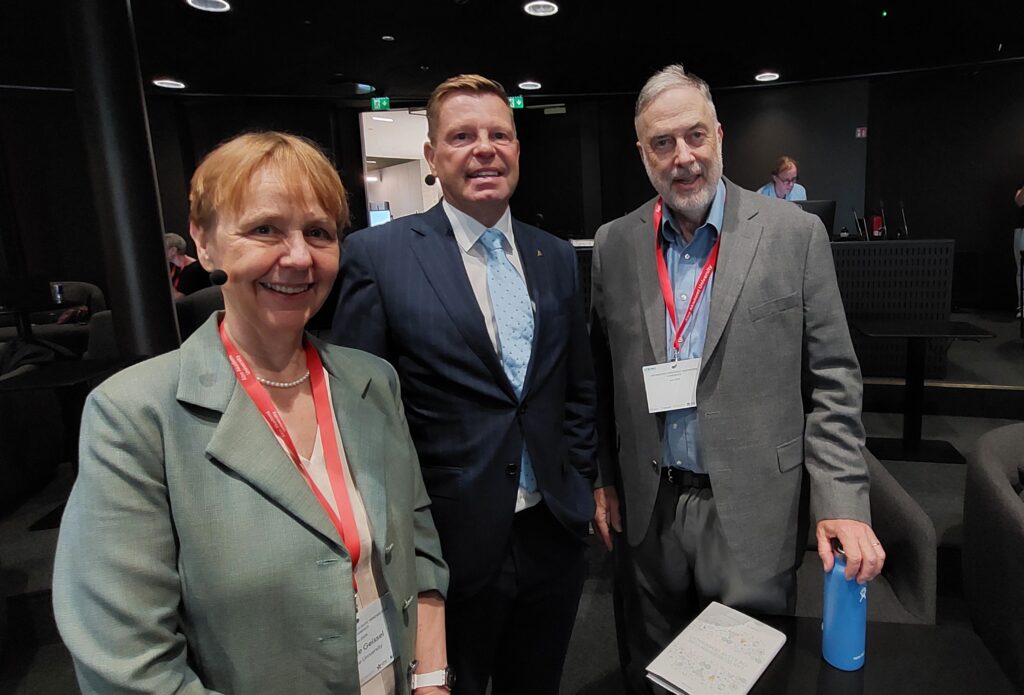
Professor James Fishkin at Stanford University is the Director of the Deliberative Democracy Lab. He has been researching and developing democratic innovations for nearly 40 years. At the conference and in his latest book, he poses the question: Can deliberation cure the ills of democracy?
“I would like you to notice the question mark. I am not claiming to have the answer. I could speak at length about the challenges democracy is currently facing. It’s very hard to know what people actually think in these times of misinformation, disinformation, social media bubbles, and the distorting influence of money in political campaigns, and so on. The connection between the will of the people and political action has broken down.”
Fishkin identifies five challenges that deliberative methods may help address. These methods provide ways to understand public opinion; create a more deliberative—more thoughtful—basis for political decisions and policy; reduce extreme partisan polarization; foster more deliberative (reflective and thoughtful) voters; and build a more deliberative society.
“Of course it is important to develop deliberative methods to support democracy. We need to know what citizens think, and at the same time we know that those who participate in citizens’ panels gain a better understanding of those who think differently, which reduces polarization. All of this is good! But we need to find ways to ensure that the results of deliberative methods are actually incorporated into the decision-making process.”
Fishkin provides many examples of instances in which he and his research team have, over the years, conducted deliberative citizen panels that have ultimately influenced decision-making. The results are promising, but a major challenge is scaling up these efforts. For example, citizens’ panels are costly to organize. Gathering a sufficiently large and diverse group of participants, covering travel and accommodation, and providing enough facilitators to manage small-group discussions all require significant resources that may not always be available.
Fishkin sees two possible paths forward: either creating many smaller citizens’ panels or developing structures that allow many or all citizens to participate. The latter could include digital platforms for public discussion, institutions that spread deliberation more widely throughout society, or initiatives such as Deliberation Day, a kind of national holiday before an election, when citizens are given the opportunity to gather and deliberate.
Professor Brigitte Geissel at Goethe University Frankfurt, Director of the Research Unit on Democratic Innovations, argues that there has been a somewhat romantic belief that a single deliberative method could “fix everything.” Over time, it has become clear that multiple methods are often needed to achieve truly equal representation and meaningful discussion.
“We need to be careful to avoid what I call ‘wallpaper democracy,’ where deliberative methods are used only to discuss trivial issues, such as the color of wallpaper. These methods must address meaningful topics, and we must be able to demonstrate that they truly influence political decisions. Otherwise, we lose credibility and people lose interest in participating,” says Geissel.
According to Geissel, it is crucial to develop a framework for systematically integrating democratic innovations into the democratic process. This is the only way they can have real impact.
“I am convinced that research within the STRONG consortium can play a decisive role in institutionalizing deliberative methods in decision-making. Already now, we can see how these methods are being integrated into the Finnish democratic system. STRONG provides strong examples of how we can move forward,” says Geissel.
The City of Turku has conducted four citizens’ panels
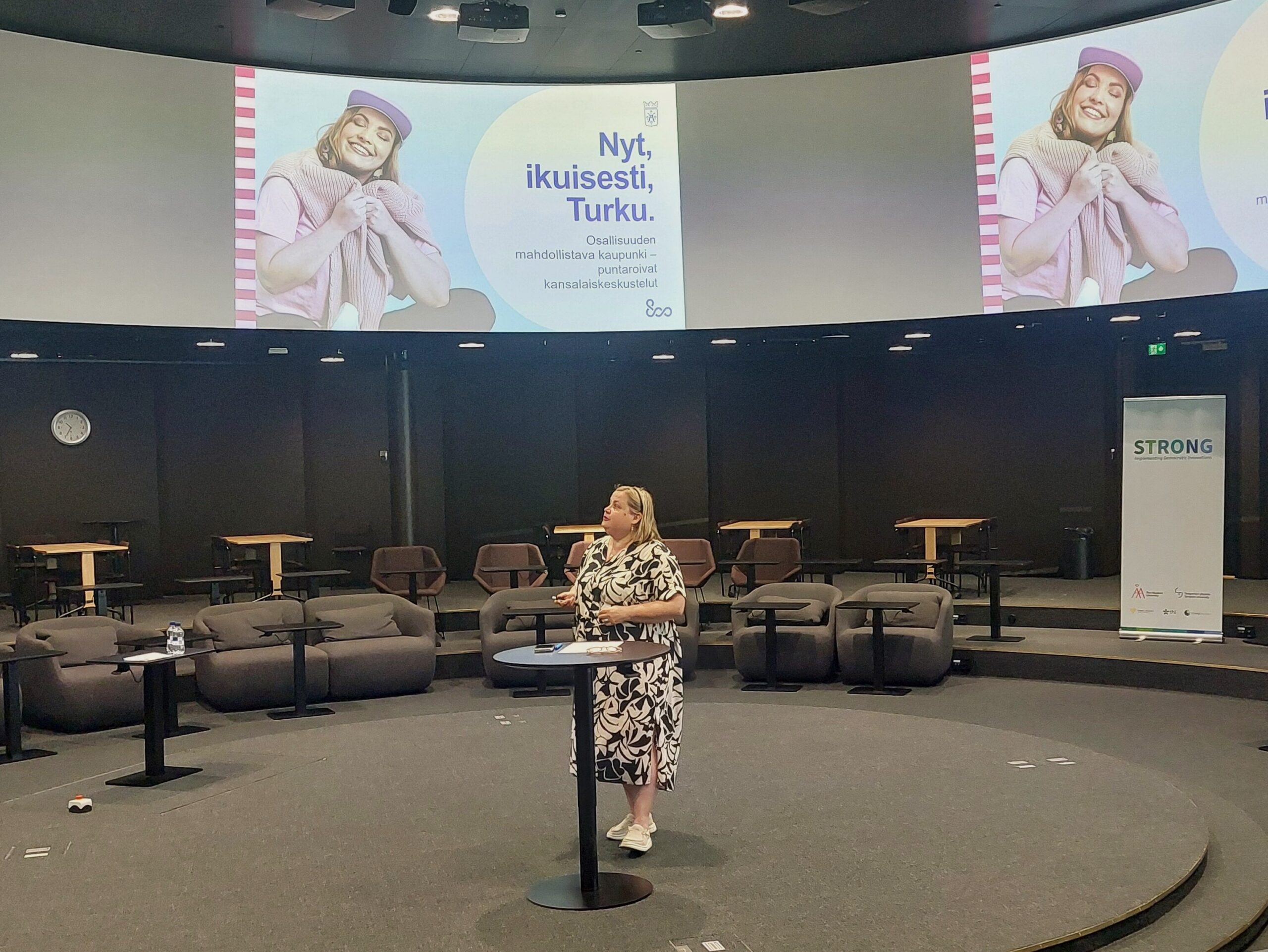
“The City of Turku wants to be a forerunner, and we want to involve residents in decision-making. Through the citizens’ panel, we especially aim to reach groups who do not naturally participate in municipal decision-making.”
Nevertheless, Mirka Muukkonen, Deputy Mayor for Wellbeing at the City of Turku, acknowledges that it is not self-evident that decision-makers welcome democratic innovations such as citizens’ panels.
“I come from a political background where such activities are welcomed, but there are also those who strongly support traditional forms of participation and who do not want ‘unnecessary noise’ between elections.”
Muukkonen points out that Turku is becoming segregated, and the city needs to find new ways to foster engagement and interaction with its residents. Deliberative citizens’ panels are one such approach. The city sent invitations to 4,000 randomly selected residents, asking them to express their interest in participating in citizen panels. 500 people expressed interest and 50 were then randomly selected for the panel.
Since 2023, the City of Turku has organized citizens’ panels on four themes selected by the City Board: (1) the allocation of resources for children and young people 2025, (2) how to build a diverse Turku, (3) Turku’s new strategy towards the 2040s, and (4) future transport solutions and the tramway.
For each theme, 5–10 recommendations were formulated to support decision-making in the City Council.
“Not surprisingly, the city strategy attracted the least interest, while transport solutions and the tramway generated the most engagement. The challenge was that although 50 participants were selected, only 17 to 30 attended. We need to find ways to ensure sufficient participation and to attract and maintain engagement among residents,” says Muukkonen.
The citizens’ panel remains part of the city’s operations for the time being. Muukkonen acknowledges that it requires time and resources but believes that it will become easier to implement as the method becomes more established.
“It is a fact that cities need innovative ways to increase participation and strengthen local democracy. For Turku, collaboration with researchers has been extremely valuable. We must recognize that both organizations and individuals need time to adopt new methods, nothing can be perfect from the start.”
The City of Vaasa has also implemented a citizens’ panel together with STRONG researchers.
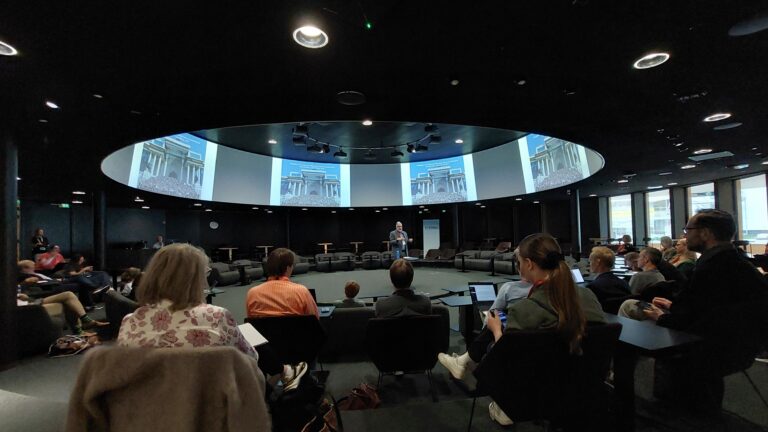
The international conference Implementing Democratic Innovations brought together around 50 participants. The conference was divided into two days: one focusing on scientific presentations and research exchange, and the other on engagement with stakeholders such as policymakers, civil servants, and other societal actors.
Projects under the strategic research programs is funded by the Strategic Research
Council (SRC), which is part of the Research Council of Finland. The Grant Number is
365618.